The academic community was put into a state of panic in the spring of 2023 when the widespread use of large language models (LLMs) became public knowledge. Universities, in their bid to uphold academic integrity, are rushing to adopt AI detection software, which is treated as the final arbiter of content validity. However, the story has changed significantly in 2026, with the emphasis no longer on "catching the cheats" but on the collateral damage caused by false positives. A false positive is the detection of human-generated content as AI-generated.
The consequences of such errors are not trivial; they have been life-altering. Students have lost scholarships, been expelled from their institutions, suffered psychological trauma, and even had their future careers eliminated before they ever had a chance. This article will explore seven key case studies from institutions around the world to understand the systemic failures of current detection methodologies and the devastating consequences of "guilty until proven innocent" practices. From an analysis of these events, we can see why relying on statistical probability rather than human judgment is a dangerous approach in higher education. For those caught in this crossfire, understanding how to humanize AI content has become a vital survival skill in the modern classroom.
Key Takeaways
Algorithmic Fallibility: It is also important to note that AI detection tools rely on probabilities rather than hard facts. They can only recognize patterns in machine-generated writing and are therefore unable to “prove” the use of AI. This results in an error rate across thousands of students.
Systemic Bias: Studies have shown that there is a strong bias in AI detection tools against non-native English speakers and those with certain neurodivergent characteristics, which may include “low perplexity” in their writing.
Legal Precedents: This year, for the first time, students have successfully sued universities, marking a new era in how the "black box" evidence presented by detection tools is viewed.
The Burden of Proof: Universities have unfairly shifted the burden of proof onto students, requiring them to prove they are not plagiarizing by handing over their search history and handwritten notes.
Humanization as a Defense: The rise of false positives has created a legitimate need for tools that humanize AI text to ensure that even genuine human writing is not misidentified by flawed algorithms.
Institutional Accountability: The case studies highlight a growing need for universities to move away from automated verdicts toward a more holistic, evidence-based approach to academic integrity.
The Mechanics of Misidentification: Why AI Detectors Fail
However, it's important to understand that these detectors don't actually read text; instead, they perform statistical tests for two key elements: perplexity and burstiness. Perplexity is the randomness of word selection, and burstiness is the variation in sentence construction. The text generated by machines is always very low in both areas, as it tries to be as "probable" as possible.
The basic flaw is that there is considerable human writing in technical reports, beginner-level essays, and non-native English, which also tends to have low perplexity and burstiness. If a student is following a particular academic rubric or using formal, structured writing, they are essentially creating the same conditions as an LLM would. This is what is causing the epidemic of false positives. For those seeking to protect their work from these flawed systems, utilizing a reliable AI humanizer has become a necessary safeguard against algorithmic bias.
Case Study 1: Australian Catholic University (ACU) The 6,000-Student Crisis
The Australian Catholic University (ACU) was at the center of the AI detection controversy in 2024, when it was discovered that the university’s internal documents showed that nearly 6,000 students were referred for academic misconduct across its nine campuses. About 90% of these were linked to AI detection software.
Madeleine, a paramedic student, lost her graduate opportunity because her transcript showed "results withheld" after a 10-week probe. The university's case rested on a report claiming 84% of her essay was AI-generated despite her detailed documentation of the writing process. It seems hard to ignore that the investigation took months and offered no clear path forward. The university dropped Turnitin in March 2025, admitting it failed to deliver timely reviews or meaningful outcomes. A solid academic record was wiped out by a flawed tool and slow action. This wasn't just about detection; it was about trust and fairness in student evaluations. This university case study serves as a stark reminder that high-volume automated flagging without immediate human oversight is a recipe for systemic injustice.
Case Study 2: Adelphi University: A Legal Turning Point
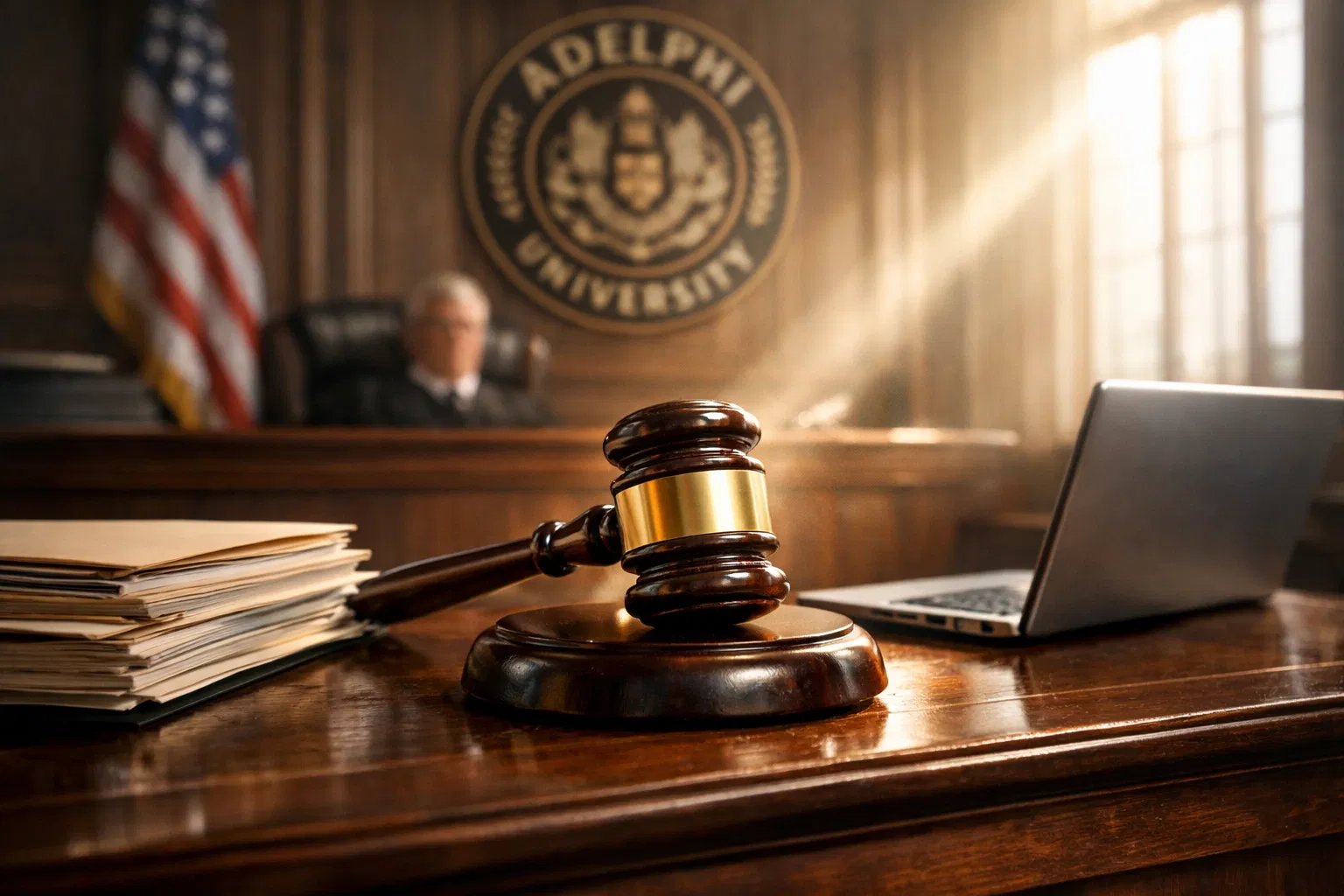
A significant case in which students' rights were protected occurred in early 2026, when Adelphi University faced the courts in a case brought by Orion Newby, who had been accused of using AI in his critical assignment. Newby had filed an appeal against the university’s decision, which was dismissed, and he then took the university to court. The university’s case against Newby rested on the claim of a student using AI in an assignment based on the "completely false" claim that the university’s tool could not differentiate Newby’s voice from AI’s.
The judge ruled in Newby's favor, stating that the university's claims were "without valid basis" and that the detection software was not a reliable enough tool to serve as the sole evidence for disciplinary action. This Adelphi AI lawsuit is significant because it broke the traditional deference courts show to academic institutions. It established that when a "question of fact" about whether the student used AI is at the center of a dispute, universities must provide more than just a software output to meet the burden of proof.
Case Study 3: University of Michigan Disability and Stylistic Bias
One particular instance that highlights this problematic nexus of bias within AI detectors and persons with disabilities is that of "Jane Doe" from the University of Michigan. The individual, who lives with generalized anxiety disorder and OCD, brought a lawsuit in February of 2026 against a teacher who accused her of AI usage not once but three times.
Doe argued that her neurodivergence leads her to adopt a highly formal, precise, and repetitive writing style that AI detectors are specifically trained to flag as machine-like. Despite providing proof of her disability and her writing process, the university proceeded with disciplinary probation. The lawsuit against Michigan alleges that the instructor’s "subjective judgments" were reinforced by "self-confirming" AI outputs. This case underscores that AI detection is not a neutral technology; it penalizes anyone who deviates from a narrow definition of "human-like" writing, effectively discriminating against neurodivergent students.
Case Study 4: University of Minnesota: The Expulsion of a PhD Candidate
After carrying out its decision to expel Haishan Yang, an international PhD student, the University of Minnesota became embroiled in an extremely serious legal dispute. In August 2024, Yang was accused of unethically using an AI tool during the qualifying exam. The expulsion of a doctoral candidate is, however, fundamentally different from expulsion in the case of undergraduates. It is essentially the dismantling of a ten-year academic career. Besides, for international students, it would mean losing legal residency status overnight.
While the Minnesota Court of Appeals ultimately upheld the expulsion in February 2026, the case revealed deep flaws in how academic misconduct is determined. The university relied on the "professional judgment" of four educators, who claimed the text "felt" like AI, citing detection scores. Yang’s defense also emphasized the extreme pressure and time constraints of an exam situation, which frequently produces precisely this sort of structured, formulaic writing. This case represents the “death penalty” of academic integrity, in which the stakes are highest and probabilities can lead to an irreversible outcome.
Case Study 5: Texas A&M Commerce The "ChatGPT Test" Failure
The most infamous example of pedagogical failure may have been at Texas A&M Commerce in May 2023. Professor Jared Mumm flunked more than half of his senior class because he submitted all their final papers to ChatGPT and asked it whether it had written them. ChatGPT, which is infamous for "hallucination" or attributing its own writings to other people, replied "yes" almost across the board.
The university was forced to withhold diplomas for several students until an investigation cleared them. This Texas A&M AI controversy became a global cautionary tale about "AI literacy" among faculty. It demonstrated that even the creators of LLMs warn against using them as detectors, yet educators driven by fear ignored these warnings. The Texas A&M incident proved that without proper training, the very tools meant to protect integrity could be used to dismantle it.
Case Study 6: Stanford University The Non-Native Speaker Penalty
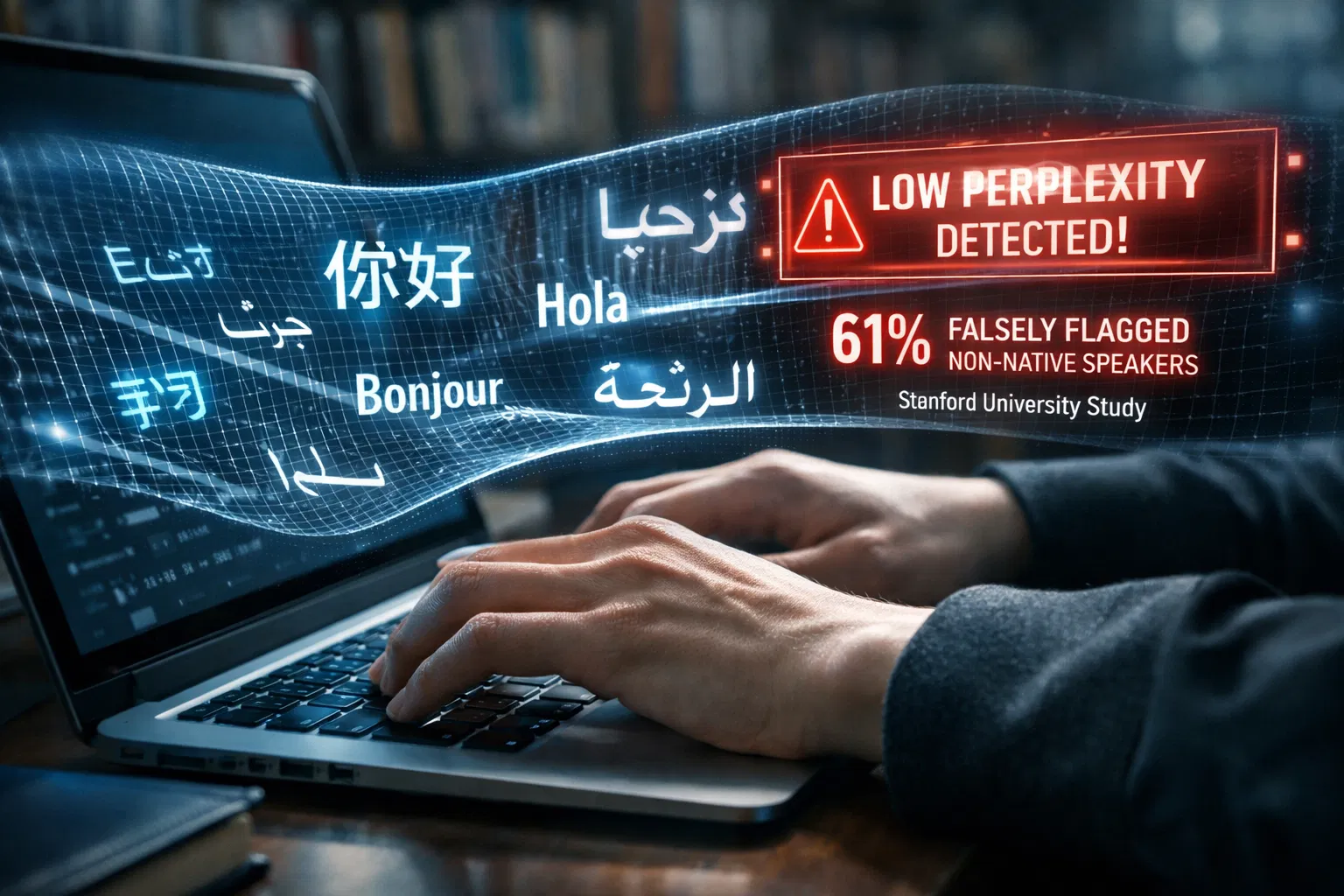
While not a single-student case, Stanford's research on AI bias provides the data-driven backbone for thousands of individual "silent" false positives. The study found that AI detectors falsely accused non-native English speakers in over 61% of cases.
The reason is simple: students writing in their second language often use a more limited vocabulary and simpler sentence structures to ensure clarity. These are the exact markers of "low perplexity" that detectors associate with AI. At universities with large international populations, this has created a two-tier system where non-native speakers are under constant surveillance. Many students now feel forced to use BestHumanize to ensure their legitimate work is not flagged by a system that is fundamentally biased against their linguistic background.
Case Study 7: UC Davis The Burden of Proof Shift
For example, at UC Davis, student advocates have pointed out a disturbing trend in the way the Office of Student Support and Judicial Affairs (OSSJA) handles AI cases. In several cases in 2024, students reported that the university placed the burden of proof entirely on them. Once a detector flagged an assignment, the student had to provide "Google Doc version history," "search logs," and even "handwritten drafts" to prove their innocence.
This "guilty until proven innocent" approach creates a surveillance environment that stifles creativity. Students who write directly in a CMS or use offline editors have no way to "prove" they didn't use AI. The UCLA HumTech report on detection imperfections notes that these policies change the relationship between student and teacher from mentorship to adversarial prosecution.
The Psychological and Professional Toll on Students
The "cost" of a false positive is not simply a grade but a severe psychological trauma. A student who is falsely accused experiences a "shattering of trust" in the educational system. The fear of being taken away by a machine at any moment creates an "academic paralysis" in which students are too afraid to use advanced vocabulary and structures.
Professionally, the damage is often permanent. Even if a student is eventually cleared, the "results withheld" status on a transcript during an investigation can cause them to miss internships, graduate school deadlines, and job offers. In the digital age, an allegation of cheating can follow a student forever, regardless of the outcome. A JISC update for 2025 emphasizes that the reputational risk for both students and institutions is reaching a breaking point.
Best Practices for Academic Integrity in 2026
As we move further into 2026, it is clear that AI detection cannot be the "silver bullet" universities once hoped for. To protect both integrity and students, the following best practices are essential:
Multi-Layered Evidence: No student should ever be disciplined solely on the basis of a detection score. Evidence must include viva voce (oral) exams, in-class writing samples, and a review of the student’s previous work.
AI Literacy for Faculty: Instructors must be trained to understand the limitations of detectors and the specific biases they hold against non-native speakers and neurodivergent students.
Safe Harbor for Drafts: Universities should encourage the use of version-controlled environments that allow students to show the evolution of their ideas.
Humanization as a Standard: For students who find themselves unfairly targeted, using an AI humanizer can help align their natural writing style with the statistical profiles that detectors consider "human," preventing the trauma of a false accusation.
Conclusion
The era of blind trust in AI detection is coming to an end. The case studies from ACU, Adelphi, Michigan, and others have proven that the "cost" of these false positives is just too high for a just society to ignore. When we allow an algorithm to judge and decide, we are giving up the very principles of critical thinking and individual expression that higher education is supposed to promote.
The future of academic integrity lies not in better surveillance, but in better relationships between students and educators, more authentic assessment methods, and a recognition that the definition of "human" writing is broader than any algorithm can currently comprehend. Until these systems are fixed, students must remain vigilant, document their processes, and use tools like BestHumanize to protect their voices from being silenced by a machine.
FAQ Section
What is a false positive in AI detection? A false positive occurs when an AI detection tool incorrectly identifies human-written text as being generated by an artificial intelligence model
Why do AI detectors flag non-native English speakers more often? Non-native speakers often use simpler, more formulaic sentence structures and a more limited vocabulary to ensure clarity, which matches the "low perplexity" patterns that detectors are trained to identify as AI-generated.
Can a university expel me based solely on an AI detector score? While some have tried, legal precedents in 2026 suggest that a score alone is not a "valid basis" for disciplinary action. Most universities now require additional evidence, though the process can still be lengthy and stressful.
How can I prove I didn't use AI? The best evidence is a clear version history of your document (e.g., in Google Docs or Microsoft Word), early drafts, research notes, and the ability to explain your thought process and sources during an oral interview.
Do AI humanizers actually work against detectors? Yes, high-quality tools like BestHumanize adjust the perplexity and burstiness of text to better match human distributions, helping protect legitimate writers from being misidentified by flawed algorithms.