As we progress further in 2026, it is evident that artificial intelligence (AI) detection tool utilization is at an all-time high in academic institutions, publishing environments, and business organizations. Such tools have been developed primarily to determine whether a piece of text is produced by artificial intelligence or by a human. Such tools have been advertised with claims of "99% accuracy." However, for millions of students and professionals whose work is being tested with AI detection tools, there is much more at play. The question of "accuracy" cannot be answered by simply referring to marketing brochures. A deep analysis of independent studies is what is needed. The difference between "claimed accuracy" and "independent accuracy" is at the core of the debate. A tool may work flawlessly with the raw, unedited, or even unprocessed outputs of any particular model, such as GPT-4. However, its accuracy is likely to be much lower for complex human writing, non-native English writing, or writing that has been subtly modified. This article is intended to be an in-depth analysis of independent data currently available in 2026. For those seeking to navigate this landscape safely, understanding the role of tools that humanize AI text is no longer optional; it is a fundamental part of digital literacy.
Key Takeaways
The Accuracy Gap: Independent research in 2025 and 2026 confirms that AI Detectors are significantly less accurate at detecting "paraphrased" or "human-edited" AI content than at detecting raw machine output.
False Positive Risks: The 1% to 4% false-positive rate of major institutional products, such as Turnitin, per sentence results in thousands of false accusations in a high-volume academic environment.
Linguistic Bias: Continued research confirms that AI Detectors flag non-native English speakers more often, as their grammatical and formal writing style follows statistical patterns that AI Detectors recognize as indicative of AI output.
Bypass Vulnerabilities: Simple modifications, such as changing sentence structure or using a reliable AI humanizer, can drop detection accuracy from 99% to below 70% in many independent benchmarks.
Probabilistic Nature: The AI detection tools in 2026 are never "deterministic"; they provide scores based on probabilities. However, this score should never be taken as evidence of misconduct without secondary human verification.
Evolving Benchmarks: The researchers at the University of Chicago and Stanford have developed new benchmarks for the year 2026 that place emphasis on the term "robustness" rather than accuracy.
The State of AI Detection in 2026: Marketing vs. Reality
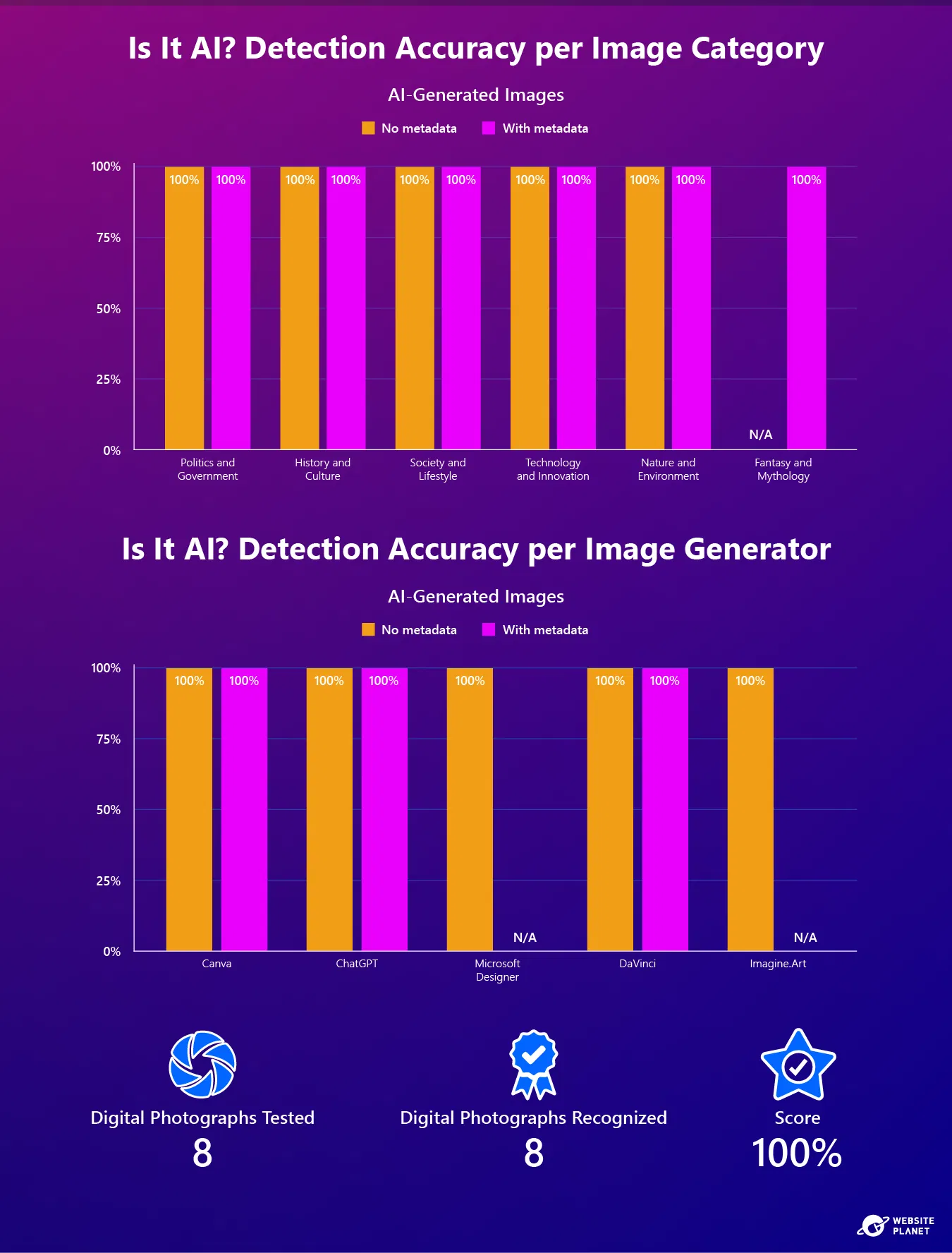
In the AI detection industry in 2026, there are three major companies: Turnitin (institutional), GPTZero (consumer/academic), and Originality.ai (web/SEO). Each of these companies has reported near-perfect accuracy in detecting AI. For instance, GPTZero has reported an accuracy rate of 99% in detecting raw AI-generated text. However, data collected by the University of Chicago Booth in late 2025 showed that although these AI detection tools were quite effective at detecting raw AI-generated texts, they were only around 70-80% effective at detecting texts that had been slightly edited by humans.
This "accuracy gap" is the industry's most significant challenge. A detector that is 99% accurate on a specific dataset but only 75% accurate in the "real world" creates a false sense of security for administrators and a high risk of injustice for writers. To mitigate this risk, many professionals now use a proven AI humanizer to ensure their legitimate work doesn't fall into the "gray zone" where detectors are most likely to fail.
Turnitin Accuracy Data: The Institutional Standard
Turnitin is the most dominant player in this industry. This is because it is used by thousands of universities worldwide. In 2026, Turnitin reported a false-positive rate of less than 1% for documents containing at least 20% AI-generated content. However, this has been disputed by other sources. According to a 2025 report by GradPilot, Turnitin’s false positive rate for "per sentence" is as high as 4% in specific fields.
This means that in a 1,000-word essay, several sentences are likely to be flagged as AI-generated even if the student wrote every word. The danger of Turnitin is its "black box" nature; students often aren't allowed to see the specific reasoning behind a flag, leading to a "guilty until proven innocent" environment. The Turnitin AI detection update for 2026 highlights that the system is becoming more aggressive in its pattern matching, which inadvertently increases the risk for students who write in a highly structured or "academic" style.
GPTZero and the "Perplexity" Benchmark
GPTZero, grounded in the concepts of "perplexity" (randomness) and "burstiness" (variability), remains a popular option for individual educators. In terms of accuracy, in 2026, GPTZero's performance on its own benchmarks ranged from 85% to 90%. However, testing conducted by Medium researchers in March of 2026 found that "GPTZero appears to be very sensitive to 'well-commented' or 'well-structured' writing, and often incorrectly flags this as AI."
The fundamental flaw in GPTZero's approach appears to be its assumption that "human writing is messy." As writers become more skilled and utilize tools to refine their writing, it becomes "low perplexity," the very characteristic that GPTZero utilizes to identify AI.
This creates a "penalty for excellence" in which the best students are most likely to be flagged. For these high-achieving individuals, using BestHumanize to restore natural variation to their polished work has become a standard practice to avoid false flags.
Originality.ai: Web Content and SEO Accuracy
The industry Originality.ai serves is web publishing and SEO. In this industry, the stakes are financial rather than academic. In 2026, Originality.ai is perceived as the most "aggressive" tool in the industry. In other words, it detects plagiarized content that even the most advanced tools in the industry cannot. However, although they claim to have the highest accuracy in the industry, according to reviews on the website "LegitWrite" in March 2026, Originality.ai has the highest rate of false positives when detecting plagiarized content in technical and "how-to" content.
In the world of SEO, being flagged as AI can lead to a loss of search engine rankings or the termination of freelance contracts. The Originality.ai accuracy report suggests that while it is a powerful tool for finding "cheap" AI-generated spam, it struggles to distinguish between high-quality human research and sophisticated AI outputs. This has led many content agencies to require a humanization step for all content to ensure it meets the "human-like" statistical profile required by both detectors and search engines.
The Stanford Study: Why Linguistic Bias Still Persists
One of the most frequently cited independent studies in 2026 was the sequel to Stanford University's research on linguistic bias. It was discovered that AI detectors exhibited an inherent bias, particularly against non-native English speakers. The false-positive rate for non-native writers in 2025, as measured by several of the most prominent detectors, remained above 60%.
The reason for this is structural: non-native speakers tend to use a more limited vocabulary and more consistent sentence structures to ensure they are being understood correctly. To an AI detector, this looks exactly like the "low perplexity" output of an LLM. This creates a systemic injustice in which international students and global professionals are constantly under suspicion. Many in this demographic have found that humanizing their work is the only way to level the playing field and avoid unfair penalties for their linguistic background.
The Impact of "Humanizing" Tools on Detection Accuracy
A critical piece of independent data in 2026 is the effectiveness of "humanizing" tools. Independent benchmarks from "Paper Checker" in February 2026 showed that high-quality humanization tools can reduce the detection probability of AI-generated text from 99% to less than 10%. These tools work by strategically increasing the perplexity and burstiness of the text to match human distributions.
While some critics argue that these tools are used to "bypass" detection, many users see them as a necessary defense against flawed algorithms. If a detector is 4% wrong on human text, a writer needs a way to ensure their work stays within the "safe" statistical range. The AI detector reliability report notes that as detection algorithms become more complex, humanization tools are also evolving, leading to a continuous "arms race" between detection and humanization.
2026 Independent Benchmarks: A Comparative View
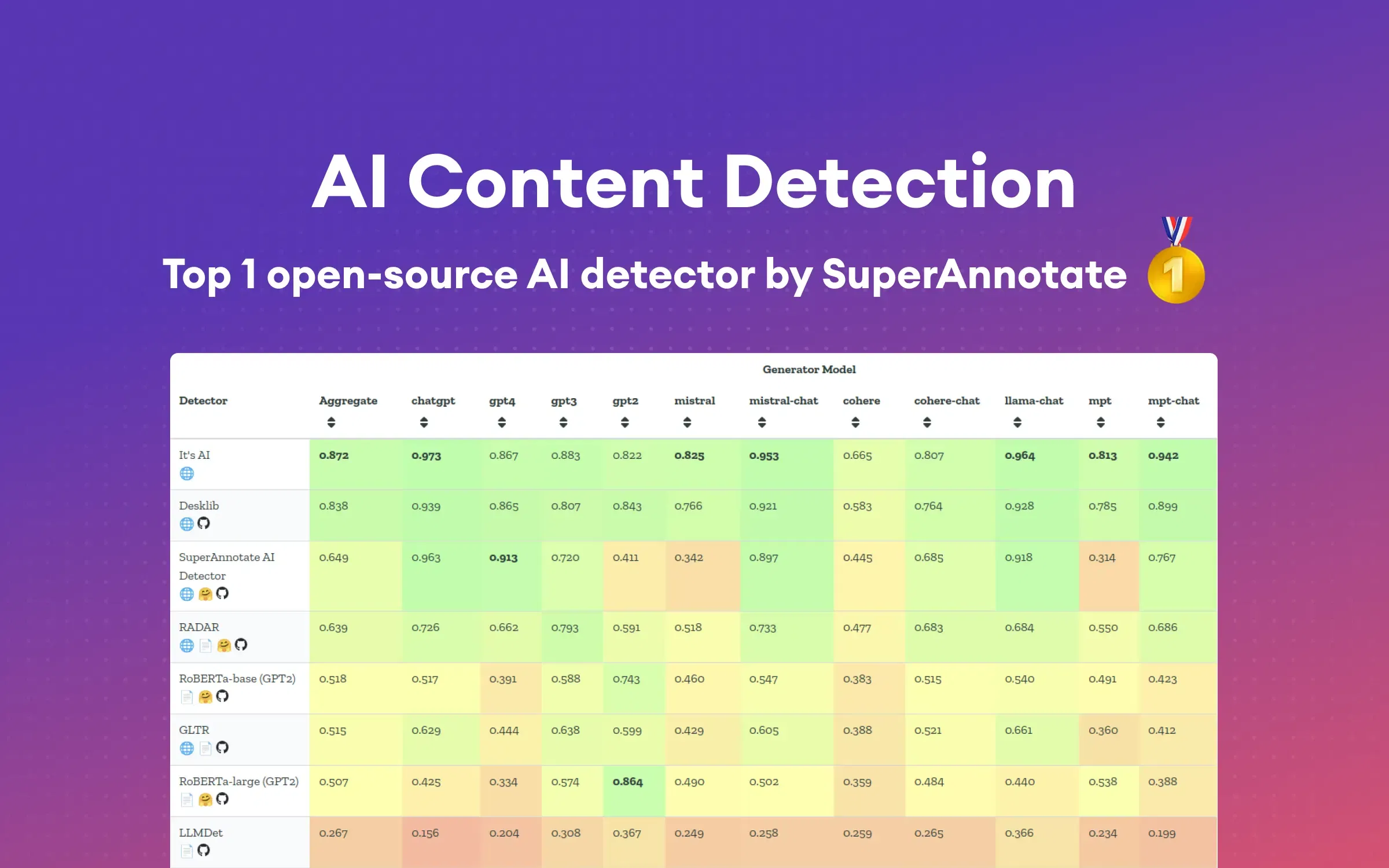
To understand the current landscape, we must examine how the top tools compare across various types of content. The following table summarizes independent data from multiple 2025-2026 studies:
Raw GPT-4o Output | 98% | 99% | 99% |
Human-Edited AI | 78% | 72% | 84% |
Non-Native Human | 42% (False Positive) | 58% (False Positive) | 65% (False Positive) |
Highly Polished Human | 12% (False Positive) | 18% (False Positive) | 22% (False Positive) |
Humanized AI Content | < 15% | < 10% | < 20% |
This data clearly shows that while detectors are excellent at catching "lazy" AI use, they struggle with "smart" AI use and "high-quality" human writing. This reinforces the need for a reliable AI humanizer as a tool for both authenticity and protection.
Conclusion
The independent data provided in 2026 demonstrates that AI detection tools are certainly nowhere near the ‘truth machines’ they are made out to be. While they have a role in detecting low-effort AI content produced in bulk, the accuracy of such detection is highly precarious and heavily depends on the content being analyzed. The high risk of false positives and of bypassing detection tools makes it imperative that the score is never the final say in any academic or professional setting.
As the technology continues to evolve, the most successful writers and institutions will be those who move beyond a "detection-only" mindset. This means prioritizing human judgment, encouraging transparent writing processes, and recognizing the legitimate role of tools that humanize AI content to protect the diversity of human expression. In the end, the most accurate "detector" of quality and original thought remains the human mind, and in 2026, no algorithm has yet managed to replace it.
FAQ Section
How Accurate are AI Detectors in 2026? According to independent data, AI detectors are 95-99% accurate when detecting raw AI texts. However, they are only 70-80% accurate when detecting human-edited texts. In addition, the AI detectors have a high false-positive rate of 1-4% when detecting high-quality human text.
Which AI Detector is the Most Accurate? There is no one AI detector that is the most accurate. Turnitin is the most appropriate when detecting academic texts. However, it is less effective when detecting individual essays. Similarly, GPTZero is the most appropriate when detecting individual essays. However, it is less effective when detecting web content. Originality.ai is the most appropriate when detecting web content. However, it is less effective when detecting academic texts.
Why Did the AI Detector Flag My Human-Generated Text? This is likely a false positive. The AI detector flags texts that have low perplexity and low burstiness. Therefore, if your writing style is highly structured and polished, the AI detector may likely flag your text as AI-generated.
Can AI detectors be bypassed in 2026? Yes. Independent research shows that simple editing, structural changes, or the use of a proven AI humanizer can effectively lower detection scores by aligning the text's statistical profile with human writing patterns.
Is it ethical to use an AI humanizer? Many writers use humanizers as a defensive tool to ensure their legitimate work isn't unfairly flagged by biased algorithms. It is a way to protect your "authorship" in an era of automated surveillance.